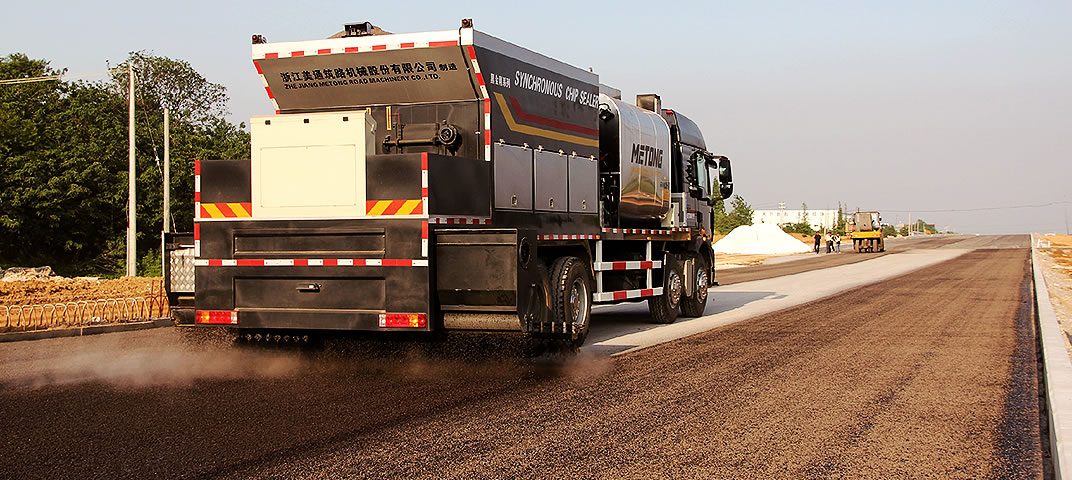
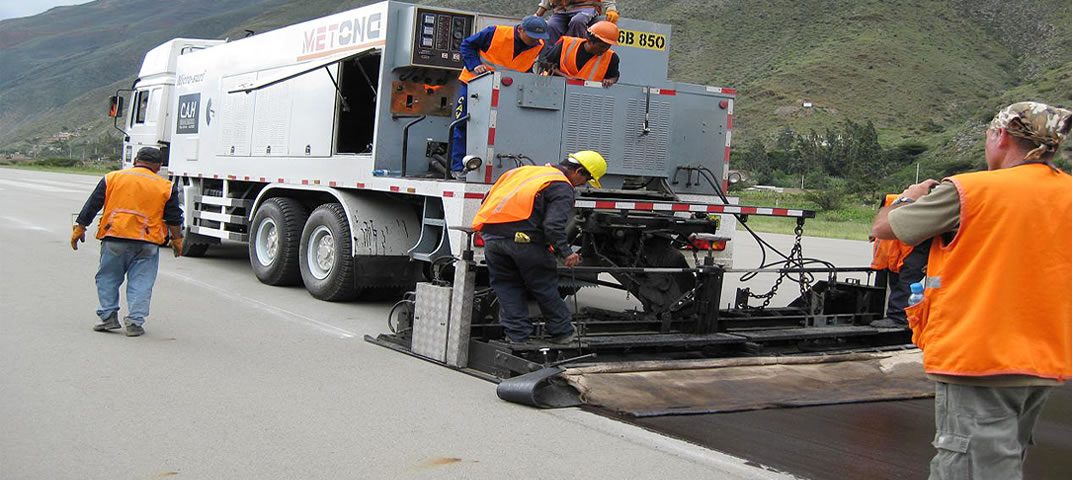
Slurry seal and micro-surfacing look identical on site: a truck-mounted paver with a pug mill, a spreader box and a crew following behind. The distinction is in the emulsifier system and the aggregate grading, and it decides whether the treatment can be used to fill ruts or only to seal a surface.
Slurry seal
A slurry seal is a thin, quick-set layer — typically 3 to 6 mm — placed to renew a surface that is oxidised but still structurally sound. It restores skid resistance and seals the surface against water. It is not designed to correct profile, and placing it thick enough to fill a rut usually fails.
Micro-surfacing
Micro-surfacing uses a chemically modified emulsion that allows a thicker, slower-curing layer to be placed and shaped. That is what permits rut filling: a first pass fills the wheel paths, a second pass seals across the full width. It can also be placed at night and opened to traffic quickly, which is why it is the default choice for urban arterials.
What to check before specifying
Three things decide whether the treatment will work: the existing surface profile, the amount of cracking, and the drainage. A surface with structural cracking under the wheel path will not be fixed by either treatment — the crack reflects through within a season. A surface with good structure and a flushed, polished texture is a candidate for either.
Equipment implications
The machine has to meter four materials continuously and hold the ratio as the paver speed changes. Independent hydraulic circuits for emulsion, aggregate, water and additive are what make that possible; a single-circuit machine will drift as the load changes. Continuous-feed configurations also matter on longer runs, where stopping to reload leaves a transverse joint that never quite matches.
Surface treatment · 5 min read